U.S. Troops Open Fire on Icelandic Rescue Team
Operation NapoleonU.S. Troops Open Fire on Icelandic Rescue Team is the armed confrontation in which American forces barred Icelandic rescuers from reaching the glacier and fired on them. The team’s bullet-riddled vehicle and the subsequent public apology make the violence difficult to conceal, but the official response redirects attention toward invented or contradictory explanations. The episode exposes the collision between a secret U.S. operation on Vatnajökull Glacier and Iceland’s claim to control movement and information within its own territory.
Background and Stakes
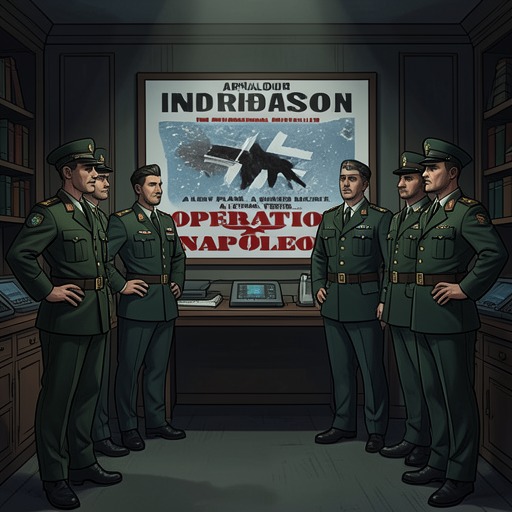
The confrontation unfolds amid a covert American operation whose purpose is itself concealed from the Icelandic authorities and from personnel at the military base. In a secret emergency meeting, an admiral insists that nothing discussed should leave the room; a general invokes the defence treaty and American surveillance of Iceland’s borders, including a closely monitored area of Vatnajökull Glacier. The secrecy is not incidental: it shapes the military’s response when the Icelandic rescue team approaches and gives the eventual shooting a larger political significance.
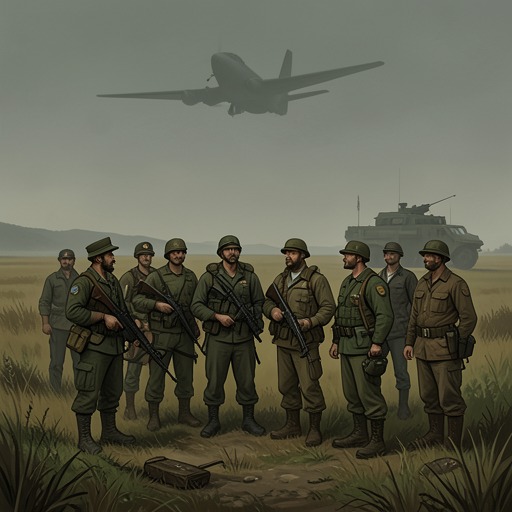
The Americans’ explanations of what lies on the glacier shift according to their audience. When challenged about the aircraft, Vytautas Carr tells a secretary that the story of the Walchensee gold began with more than three hundred small bags, each containing a gold bar, sent from the Reichsbank shortly before the fall of Berlin. He then reveals that much of the gold had been taken from concentration camps. Separately, an American general tells the Icelandic prime minister that there is an old German bomb on the glacier and that the rescue team should be called home to avert catastrophe. At the base, Ratoff tells a pilot that there is no bomb aboard the German aircraft and that it is completely safe. The accounts do not establish the shooting’s immediate trigger; together, they show the unstable cover stories surrounding the operation and the pressures under which the rescue team is kept away.
Blockade and Shooting
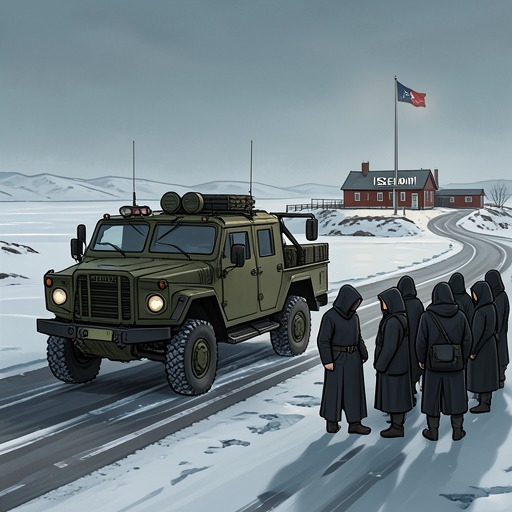
At 11:30 p.m. on Saturday, 30 January, the rescue team waits beside and inside two tracked vehicles after American soldiers have stopped its advance. The soldiers search the rescuers and vehicles, remove their communications equipment—including flares, radios, and mobile phones—and return to their original position. They hold the line beside their snowmobiles, preventing the Icelanders from proceeding. The team does not provoke them, wary of giving the soldiers an excuse to use their rifles again.
Júlíus manages to slip away from the guarded vehicles. He climbs out through a door, lies still beneath a vehicle, then crawls between snowmobiles and disappears into the darkness. His anger is inseparable from his fear for Kristín and her brother, Elías: he resents being searched, threatened, and barred from moving freely in his own country, and feels guilty about nearly losing Elías. He wants to support Kristín’s account of the army’s activities and worries that she, too, may be in danger. His escape makes the blockade more than an abstract dispute over jurisdiction: the soldiers’ control of the glacier obstructs both the rescue effort and the Icelanders’ ability to bear witness.
Júlíus later tells Kristín that the Americans prevented the team from coming to join her and that they shot at the rescuers. He had been released outside the gates of the U.S. base and made his way back to town, where he contacted the team on the glacier. The precise circumstances of the gunfire are conveyed through his report rather than staged as a direct scene; its physical consequence is visible in the newspaper photographs of the team’s vehicle, riddled with bullets.
Public Account and Cover Stories
The rescuers contact the media as soon as they are released. The Americans issue an apology, and army spokesmen describe the incident on television and radio as an overreaction by soldiers who perceived a threat during conventional winter exercises with Dutch and Belgian NATO forces. They claim that obstructing the Icelanders was never intended, promise an inquiry and compensation, and deny knowing what happened to Elías and Jóhann or knowing anything about Kristín.
The explanation of the aircraft is no more consistent. American forces deny knowledge of a German plane on the glacier. Radio news says the soldiers were searching for satellite-tracking equipment lost years earlier by an aircraft crossing the glacier; television describes a staged rescue exercise involving pieces of an old DC-8; an evening newspaper reports a hunt for lost gold reserves. These accounts recast a secret recovery operation as unrelated exercises, a search for lost equipment, or a hunt for treasure. Júlíus’s phrase for the situation is that the Americans have been thorough: the competing stories do not clarify events so much as make the truth harder to locate.
Consequences and Significance
The shooting gives the Icelandic rescue team material evidence with which to challenge the American version: its damaged vehicle and the reports printed beneath headlines announcing that the rescue team was attacked and that shots were fired at the Reykjavík rescue team. Yet public acknowledgement of the gunfire does not bring disclosure about the glacier operation. The apology and promised inquiry address the immediate violence while the Americans continue to deny involvement in the fate of the missing men and deny knowledge of the aircraft.
The episode therefore links bodily danger to a wider contest over sovereignty and narrative control. Earlier, the Icelandic prime minister threatens a formal protest, a public investigation in both Iceland and America, closure of the roads between the glacier and the base, and a public address to the nation. The American general responds by invoking a bomb and urging the government to recall the team. Against that pressure, Júlíus’s return with newspaper evidence makes the rescue team’s account publicly legible, even as contradictory military explanations try to bury the operation in confusion. The confrontation marks the point at which the secret mission’s violence becomes a matter of public record without making its underlying purpose public.